
Malbec and Cabernet Sauvignon often sit next to each other on the shelf. Both are dark. Both are full. Both go with a steak. So it is fair to ask what separates them.
Cabernet tends to feel firmer and more structured. Malbec tends to feel rounder and softer. That is most of it, but the details help when you are standing in the shop deciding.
Where each grape comes from
Both grapes trace back to France.
Cabernet Sauvignon is most closely tied to Bordeaux, where it is often blended with other grapes. Today it is grown almost everywhere wine is made. Napa Valley, Chile, Australia and Washington State are a few of the places known for it.
Malbec also has French roots, in the southwest of the country. It found its real home in Argentina, though, and Mendoza, at the foot of the Andes, is where most people now meet it. The history of Malbec tells how it got there, and our short guide to Mendoza wine country covers the region itself.
So when you choose between them, you are often choosing between places, too.
Body and tannin
Tannin is the dry, gripping feeling a red wine leaves on your gums and the inside of your cheeks. It comes mostly from the grape skins and seeds, and it is the clearest difference between these two wines.
Cabernet Sauvignon usually has firm tannin. Young Cabernet can feel tight, even a little austere, until it has had time in the bottle or air in the glass. That grip is part of why it is known for aging well.
Malbec usually has softer, rounder tannin. It feels plush from the first pour, which makes it easy to open on a weeknight without much planning.
On body, the two are close. Both are full-bodied reds. Malbec often reads as fleshier, Cabernet as more linear.
Typical fruit and aroma
Every bottle is different, and the place and the year matter. Still, each grape has a familiar character.
Cabernet Sauvignon tends toward:
- Blackcurrant and black cherry
- Herbal or green notes, sometimes described as bell pepper or mint
- Cedar and graphite as it ages
Malbec tends toward:
- Plum, blackberry and dark cherry
- Violet and other floral notes
- Cocoa or a little spice
Put simply, Cabernet often leans savory. Malbec often leans dark-fruited and floral.
Food: where each one shines
Both wines like protein and fat. Tannin and fat soften each other, which is why red meat and big reds work so well together.
Cabernet's firmer tannin wants something rich to push against. A well-marbled ribeye or a standing rib roast, lamb with rosemary, a plate of aged hard cheeses.
Malbec is happy with grilled steak the way it is cooked across Argentina, with beef empanadas, braised short ribs, burgers and mushroom dishes. Anything with a little smoke or char suits it.
Because its tannin is softer, Malbec is often more forgiving across a crowded table, and it handles smoke and gentle spice without clashing. For more ideas, see what to pair with Malbec. If you are cooking for the cooler months, our fall wine pairing guide has more.
How to choose between them
- Opening it as soon as you get home, no decanter? Malbec tends to be ready sooner.
- Something very rich and simple, like a big steak? Either works. Cabernet will feel more structured, Malbec rounder.
- Mixed table, lots of dishes? Malbec's softness usually makes it the easier fit.
- Putting a bottle away for years? Cabernet has the longer reputation for aging.
Neither is better. Cabernet is a little more formal, Malbec a little more relaxed. Pick the one that suits the night.
A note on serving
Both show best slightly cooler than room temperature, around 60 to 65°F. If your kitchen is warm, give the bottle twenty minutes in the fridge before dinner. Pour one glass early and let the rest breathe while you cook. Our guide to serving red wine has more on temperature and air.
Our Malbec
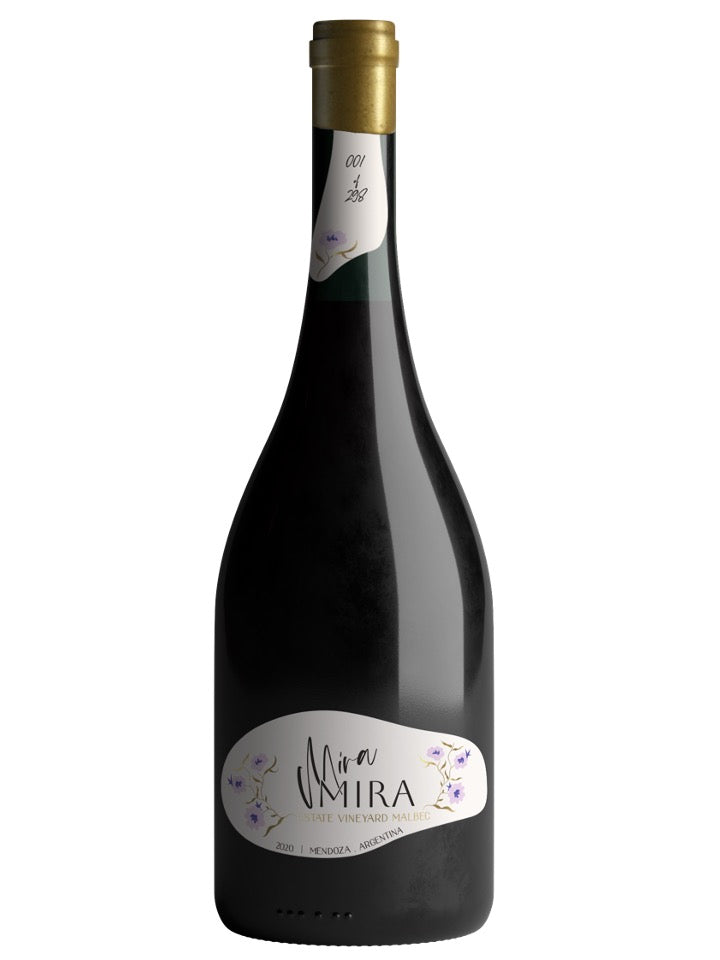
We grow Malbec at our vineyard in Perdriel, Mendoza, from vines planted in 1927. If you are curious, see our Estate Malbec.
Questions we get
Is Malbec sweeter than Cabernet? Not usually. Both are typically made dry. Malbec's ripe fruit and softer tannin can make it seem sweeter on the first sip, but that is fruit, not sugar.
Which one is stronger? It depends on the bottle more than the grape. Both are often made in a full style. Check the alcohol level on the label if it matters to you.
Can Malbec and Cabernet be blended? Yes, and many wineries do it. Malbec has long been one of the permitted blending grapes in Bordeaux, and in Argentina you will often see the two together on one label.